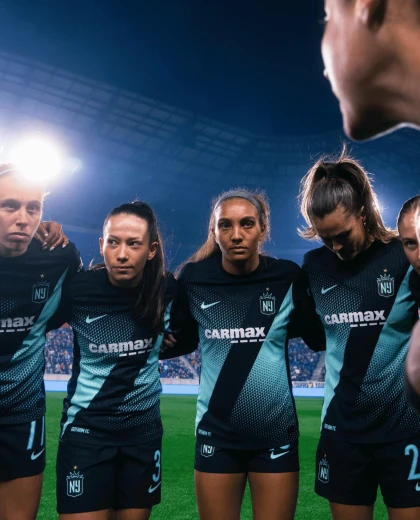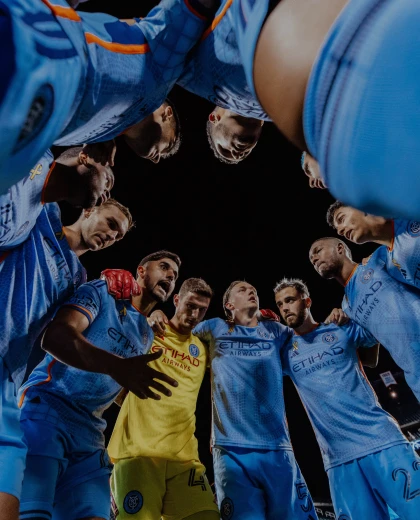
As generated video gets better, real moments become the most valuable content there is, and the challenge for sport is no longer demand but producing enough of them. Here's how I see it.
The real thing is about to get more valuable
Every few weeks a new model ships that makes AI generated video look a bit more real. A press conference that never took place. A crowd that was never in the stadium.
People tend to ask me if this worries me. It does the opposite.
When anything can be generated, value moves to what can't be. And very little can't be. Things that happen once, live, with an outcome nobody knows in advance. That's sport. As synthetic content floods every feed, a real moment, captured as it happens, becomes the scarcest thing on the screen.
Being scarce doesn't make it available, though.
Sport's problem is supply, not demand
The demand for sports content has never been higher. Fans in different parts of the world watch for different reasons, sponsors want proof of every second of exposure. Athletes are media brands with their own audiences, while broadcasters want their local hero, not the global storyline.
Each of those is a different edit of the same moment. Multiply that by players, languages and formats, and a single day of a major tournament asks for thousands of versions.
The industry's answer has always been people, and very good ones. But every clip still needs someone to spot the moment, cut it, check it and ship it. That cost grows in a straight line. Demand doesn't.
So most of what gets filmed is never seen. Not because nobody wants it, but because nobody had time to make it.
Why "just use a model" doesn't work
The obvious reply is that AI can edit now. And it can, in a demo.
The hard part isn't cutting one clip, but doing it live for hundreds of organizations on a daily basis, without breaking a rights deal. It's knowing a clip can go out in one territory and not the next. That one sponsor's logo can't sit next to a competitor's, or that footage from 1998 lives in a different place from last night's feed.
None of that is model work. It's infrastructure. Storage that reaches wherever the media lives, software that runs inside venues and not just in the cloud, an engine that can edit a feed before it has finished recording, and rules applied automatically with data coming back on what performed.
The model is the clever part. The infrastructure is what makes it work in sport, and it's the part that's hardest to copy. It's what 350+ organisations already run on at ScorePlay.
The editor doesn't go away
There's a lazy version of this story where automation replaces production teams. I don't think that's what happens.
What we see in practice at ScorePlay is that once the repetitive work goes, editors move up. They stop hunting for moments and start deciding which stories to tell. At Tennis Australia, one feed already turns into several finished packages within minutes of the final point.
That doesn't mean fewer people, but that every person spends more time on the work that needed a human in the first place.
Why sport goes first
If you set out to design the hardest possible test for AI video, you'd pick sport. It's live, so delays are costly. It's rights-heavy, so every frame comes with rules. It's global, so every moment needs many versions.
Get it right there, and it works for anything that happens once: concerts, news, any live event.
I think we're heading toward a world where every broadcaster runs its own live production, and eventually every fan has theirs. Not one feed for the whole planet, but millions of real ones.
AI will make generated content abundant, and the more interesting question is who makes reality abundant too.
I'll go deeper on Tuesday 10 November at Web Summit, Center Stage at 9.30am. If you're around, come find me.