A 20-minute dig through Dropbox, cut to five. That was the line two of US soccer's sharpest media teams kept coming back to when we got them talking shop.
Chicago Fire FC (MLS) and Bay FC (NWSL) joined us for a live panel on how their media operations actually run. From the moment the camera rolls on matchday to the moment content lands on social, broadcast and partner channels. No slides, no pitch. Just two teams talking about what works, moderated by Mickey Kennedy, one of our Customer Success Managers.
We had a great turnout, with clubs and leagues from all over the world tuning in live. One thread ran through the entire hour: tagging discipline is what pays off. Specific tags (by player, by action, by game) turned a hunt to find the right clip into a few clicks. Everything else the panel talked about built on that one habit.
Here's what else stood out:
1. Ownership beats ad hoc use
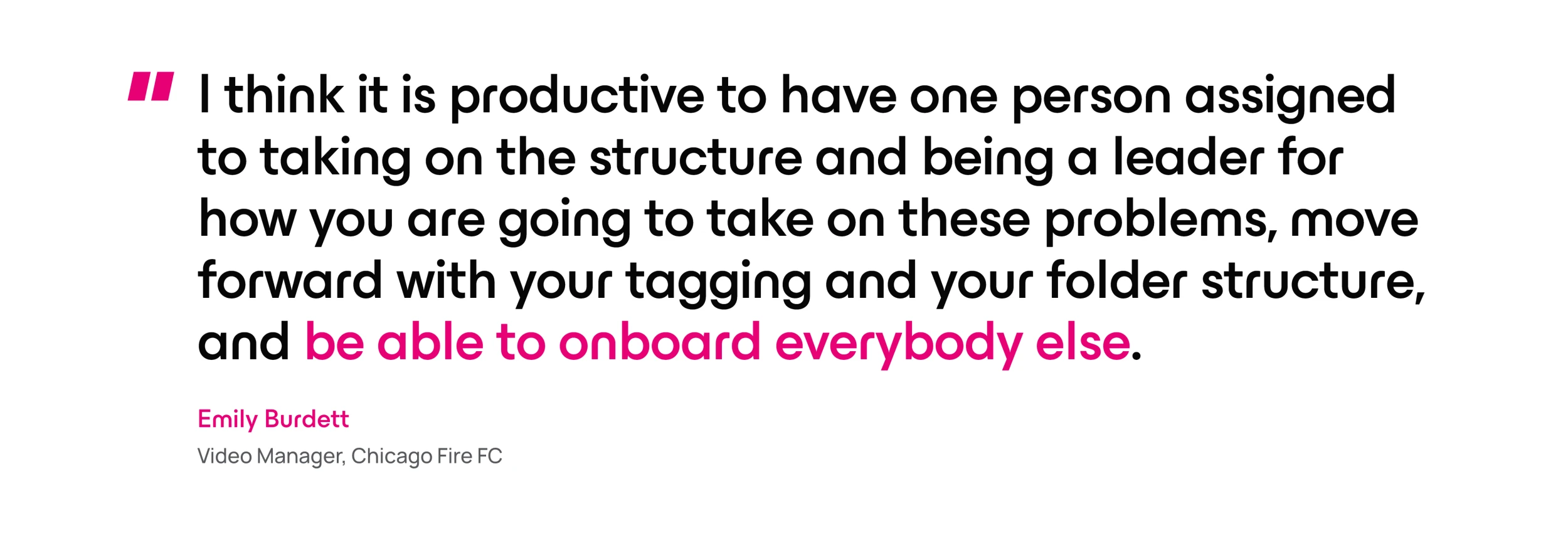
A tagging structure only works if someone's responsible for it. Both clubs pointed to a single owner of the folder and tagging system, someone who sets the standard and leads new hires through it. Tellingly, both teams had rebuilt their structure at least once. Not because the first version was wrong, but because it took a few games to see what actually held up.
2. Access control has to be deliberate
Bay FC learned this one the hard way. Ungraded footage made it out to a player's socials before it should have. Their fix is now standard practice, where broad access sits at the graded, ready-to-share layer, while raw footage stays locked down with the video team. Wide access and tight control aren't a trade-off once you draw that line correctly.
3. One home for footage beats five
Storage in one tool, feedback in another, versions saved to a local drive. Every extra tool is another place a clip can go missing. Both teams have consolidated around a single source of truth for footage, so "that clip from three months ago" doesn't depend on someone's memory.
4. Prioritization is a skill, not a feature
Not everything needs to go out at once, and knowing the order matters more than any tool:
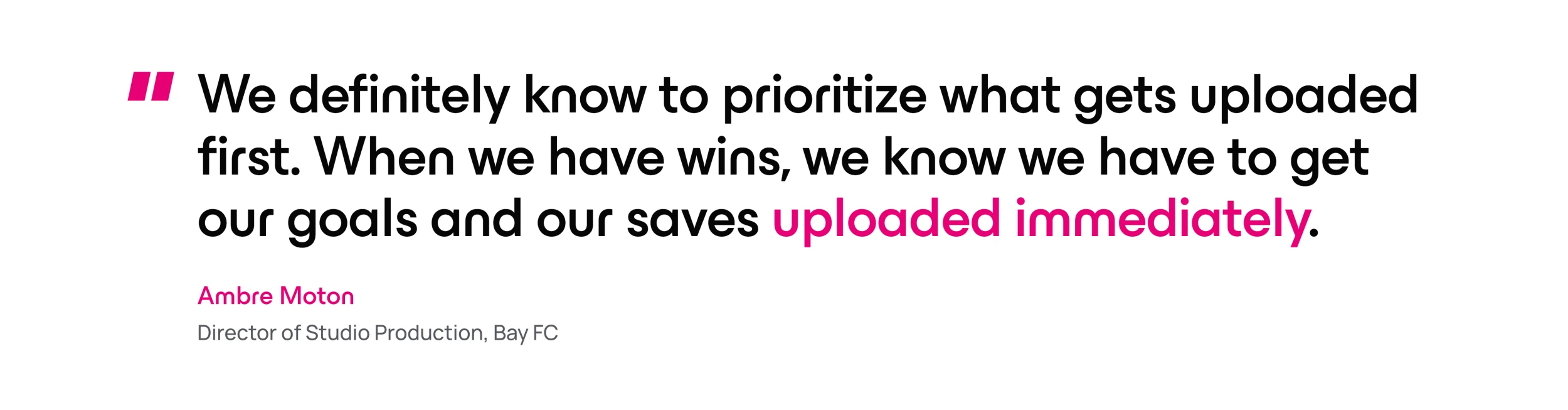
Goals and saves go out straight after the final whistle.
Fan reaction gets cut for the news desks shortly after.
Press-conference sound can wait until the next day.
Treating the queue as a call to make, not a checklist to clear, is what keeps the pace sustainable.
5. Sharing benefits compound
The more teams working from the same footage, the more the time savings add up. Once comms, partnerships, league offices and broadcasters are all pulling from the same platform, requests that used to mean a back-and-forth email thread turn into a shared link. The speakers called out transfer windows specifically. When a dozen people need the right clip, fast, at the same time.
Thanks to Ambre, Connor, and Emily for the candor, and to everyone who joined live with questions of their own.
If your club is building out a video operation and wants to compare notes, get in touch with our team, we're always happy to talk, no pitch required.